Wtf even is Rhopography
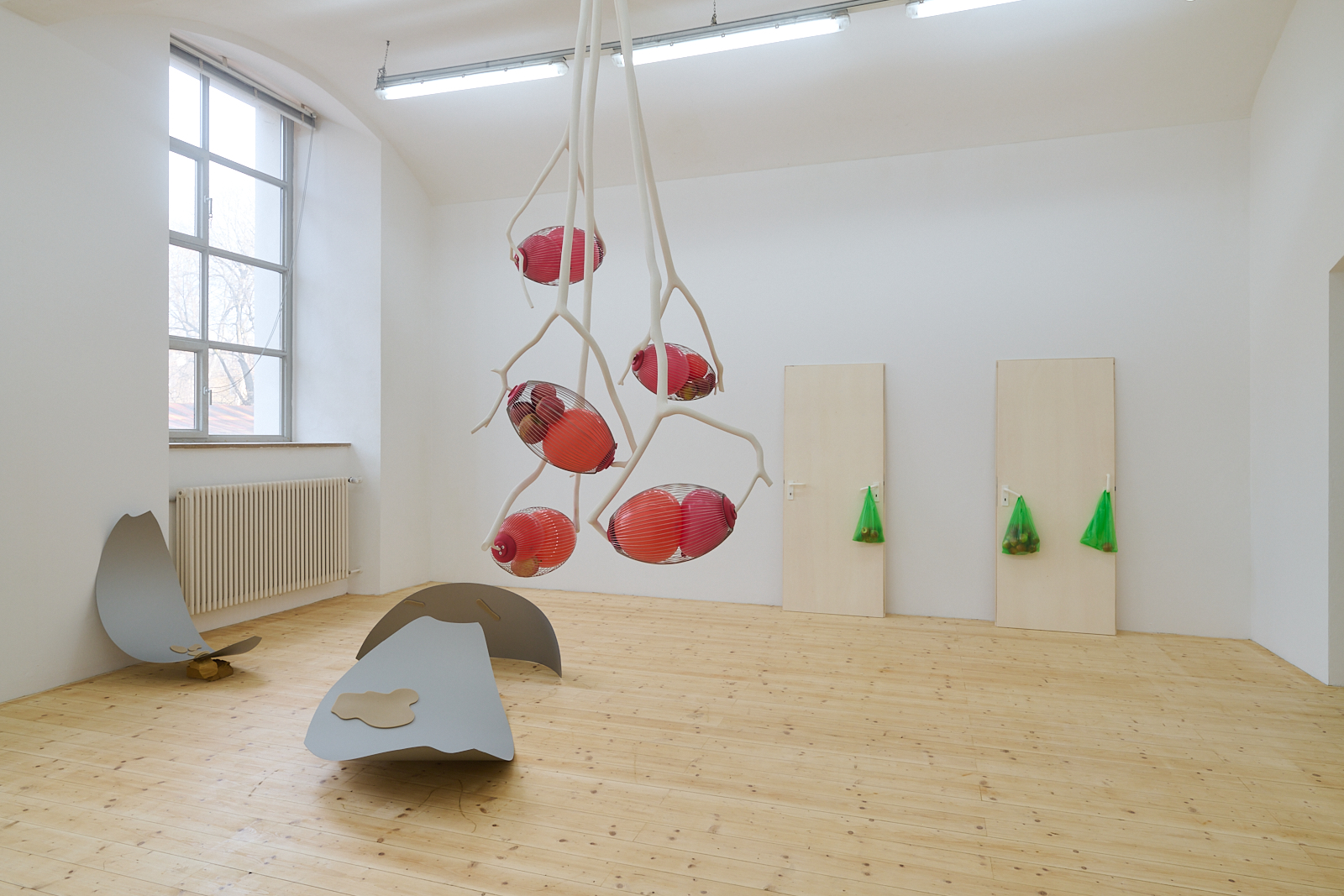
Still life has long been a genre of modesty. Turning away from the idealized human figure and instead looking at what is near, trivial, domestic and supposedly unimportant. In Jonas Strobl`s sculptural work, still life is not quoted, but rather displaced. Through enlargement, translation and material presence, the familiar objects leave their habitual proximity and step onto a stage, where reality turns into play.
His practice is one of transgression: a crossing of boundaries within the genre itself. By shifting still life into sculpture, one of its defining markers—nearness—is undone. By introducing touch, the work moves even further away from the pictorial tradition. The hand joins the eye. Habitual gestures are interrupted, and the viewer is invited to remember the act of doing through the act of observing.
Positive and negative space, importance and waste, are mutually defined. What we call important can exist only by declaring something else insignificant. By closing one eye, seeing less becomes a way of seeing more.
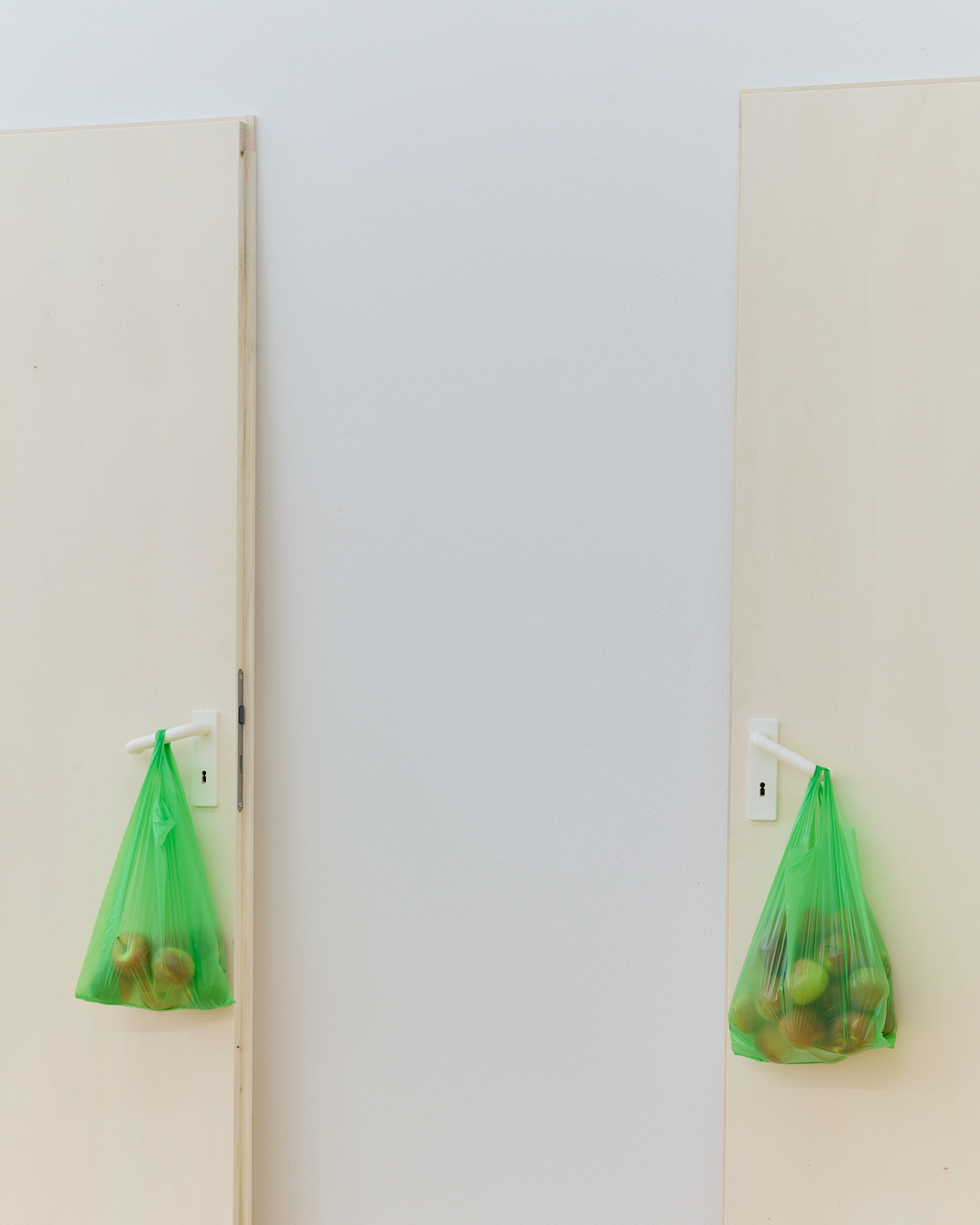
Common materials—doors, handles, apples, bags and branches—all appear dissociated from their original functions. Similar to photographic found footage, they are not elevated through rarity but through attention. Uniqueness becomes irrelevant; surfaces, textures and scale take over.
What once served quietly now insists on being looked at.
To end with a quote that hits the nail on its head:
„From another point of view, the result is what is valueless becomes priceless: by detaining attention in this humble milieu, by imprisoning the eye in this dungeon-like space, attention itself gains the power to transfigure the commonplace, and it’s rewarded by being given objects in which it may find a fascination commensurate with its own discovered strengths“
Norman Bryson, Looking at the overlooked (1990)
- Alex Jeskulke, 2026
Fotograf: Alex Jeskulke